
How Easy Is It to Start Talking With an ai chat Character?
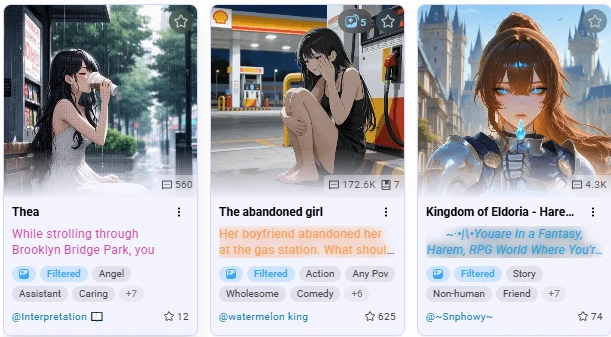
Starting a conversation with an AI chat character https://crushon.ai/trends/nsfw_ai has become remarkably simple. Unlike traditional chatbots that depended on command-based inputs or fixed menus, modern AI characters are designed to communicate the same way humans naturally exchange messages. Whether someone types a greeting, asks a question, shares a story, or even sends an incomplete thought, the AI attempts to interpret the intention behind the message instead of searching for an exact keyword.
This low barrier to entry is one of the biggest reasons AI chat applications have expanded rapidly across different age groups. New users no longer need technical knowledge, programming experience, or detailed instructions before beginning a conversation.
One reason conversations feel natural is that today's AI models have been trained on enormous collections of human language. Rather than memorizing responses, they learn statistical relationships between words, grammar, context, and conversation flow. As a result, an opening message can be as simple as:
-
"Hello."
-
"I'm feeling bored."
-
"Can we talk?"
-
"Tell me a story."
-
"Pretend you're a detective."
Each prompt immediately gives the AI enough information to generate a meaningful reply, reducing the hesitation many first-time users once experienced.
The design of AI chat platforms also contributes to accessibility. Most applications remove complicated setup processes and instead present users with ready-made characters representing different personalities, professions, interests, or fictional roles. Selecting one often requires only a single tap before the conversation begins.
Many platforms also include suggested opening questions beneath the text box, such as asking about hobbies, requesting recommendations, or starting roleplay scenarios. These suggestions help users overcome the common "blank page" problem where they simply do not know what to say first.
Another factor that makes conversations easy is contextual memory during a session. Instead of treating every message independently, modern AI remembers previous parts of the discussion and uses them to generate more coherent responses. After a user mentions enjoying science fiction, for example, later recommendations naturally shift toward space exploration, futuristic technology, or popular sci-fi novels without requiring the preference to be repeated.
This conversational continuity makes interactions resemble ongoing discussions rather than isolated question-and-answer exchanges.
The flexibility of language is equally important. Users do not have to write perfectly.
An AI chat character can usually understand:
| User Input Style | AI Response Ability |
|---|---|
| Complete sentences | Excellent |
| Short phrases | Excellent |
| Casual slang | Usually very good |
| Grammar mistakes | Often understood |
| Mixed questions | Usually interpreted correctly |
Because language understanding has improved significantly, users spend less time worrying about wording and more time focusing on the conversation itself.
Personalization further lowers the learning curve. Many AI chat systems gradually adapt to conversation preferences within the current interaction. If someone prefers longer explanations, humorous replies, emotional support, or concise answers, the AI often adjusts its communication style after several exchanges instead of requiring manual configuration.
This adaptive behavior reduces friction because users rarely need to customize dozens of settings before chatting.
Different conversation goals are also supported naturally.
A student may ask for homework assistance, a traveler may request itinerary suggestions, a writer may brainstorm story ideas, while another user simply wants casual conversation after work. The same underlying AI can shift between these purposes with minimal effort from the user.
Compared with traditional customer-service chatbots, AI characters also tolerate ambiguity much better. Earlier systems frequently responded with "I don't understand" when wording differed from predefined templates. Modern large language models instead estimate the most likely meaning based on context, making conversations feel considerably smoother even when users express themselves imperfectly.
Emotional accessibility plays a role as well. Many first-time users report feeling less pressure when talking with AI because there is no fear of embarrassment, interruption, or social judgment. People can ask basic questions, repeat themselves, or change topics abruptly without worrying about appearing uninformed.
That psychological comfort encourages experimentation, especially among users exploring new hobbies, practicing foreign languages, or rehearsing interviews.
Voice interaction has made the process even easier. Instead of typing, users can simply speak naturally while speech recognition converts spoken language into text for the AI. Improvements in speech synthesis then allow the AI character to respond conversationally, making interactions resemble everyday dialogue rather than software operation.
However, ease of starting a conversation does not mean every interaction is perfect. AI characters may misunderstand vague requests, generate inaccurate information, or interpret ambiguous wording differently than intended. Clear instructions and occasional clarification still improve response quality, particularly for complex tasks requiring precision.
Fortunately, users generally learn this quickly. After only a few conversations, most people discover that providing a little more context—such as goals, preferences, or background information—produces substantially better responses without making the interaction feel complicated.
As AI language models continue advancing, the initial barrier to conversation is becoming almost invisible. Opening a chat increasingly resembles sending a message to another person: no manuals, no specialized commands, and no technical expertise required. For millions of users, the hardest part is no longer figuring out how to begin talking with an AI chat character, but deciding what they want to discuss first.
Ship a brand investors actually remember.
Book a 30-minute call and walk away with a sharp brief, a fixed quote and a delivery date — usually within a fortnight.